Showing posts with label Maine authors. Show all posts

Wednesday, December 7, 2022

Changes in the Weather by Leela Marie Hidier

Changes in the Weather is a young adult novella about climate change told in four distinct voices. In "Wind" a hurricane forces Isla's family into a nomadic motel existence. Prolonged drought in "Earth" sucks the life blood from the farm of Ava's grandmother. While in "Water" too much rainfall threatens Xenia's riverside town.  The aftermath of "Fire" leaves Natasha to nurture her younger siblings while their mother undergoes surgery. In each story a teenage girl finds herself in a new role as climate disaster upends her life. Although the book is a work of fiction, it rings all too true to life right now.

Debut author Leela Marie Hidier, a teenage girl herself, did a phenomenal job in distinguishing the voices of her protagonists and making them and their environment believable through well observed sensory details, secret thoughts, and solid climate research. Each of the girls has a unique personality and family situation which shape their differing responses. Coddled Isla uprooted from her nurturing neighborhood becomes rebellious. Privileged Ava tries to escape into a romantic oasis. Alienated Xenia seeks solace in music. Steady Natasha records every detail like a reporter. Their struggles to adapt to the rapidly changing world make for compelling stories, both personal and universal, which all interconnect in the satisfying concluding segment. 

The writing was strong and clean, packing an emotional punch from the first chapter. Here's Isla on abandoning her only home in a hurricane: "I wonder what else I would have taken if I'd had more time. Maybe I would have taken more time."

Author photo by Winky Lewis
The publisher and sponsor of this marvelous debut is The Telling Room, a non-profit organization which supports emerging young writers in Maine with a diversity of experiences. Leela was born in London to an American mother and a French father. I first connected with her family through reviewing another debut novel, Born Confused, by her mother, Tanuja Desai Hidier. I was delighted when the Hidiers relocated near me in Maine five years ago. Leela asked me to beta read her penultimate draft, and she's done a remarkable job in writing and revising such a polished, meaningful book during her junior year in high school. With a gorgeous cover designed by Leela's cousin Meenal Patel, this 153 page novella would make a fabulous gift for any aspiring writer or climate activist. All proceeds from books sales support The Telling Room.  

Wishing you happy and healthy holidays with lots of time to read good books! I'm currently reading and enjoying The Sentence by Louise Erdrich (literary fiction) and Hija de la Fortuna by Isabel Allende (novela histórica en español.) Follow the link below for more book suggestions from other reviewers. What are your recommendations?

Click icon for more
book review blogs
@Barrie Summy

Wednesday, November 11, 2020

Writers & Lovers by Lily King

Lily King's recipe for Writers & Lovers will entice all readersstart with raw, confessional honesty, add a passion for gourmet food, spice with good and bad sex, mix well with poor judgement, and finally roast all the characters at high heat. If you're looking for a fun escape from these dystopian times, here's your time machine to 1990's Harvard Square. 

A couple of years past thirty, Casey Peabody lives in a dingy room above a garage, working double shifts as a waitress to afford a few early hours to focus exclusively on her literary novel. Unpaid student loans and credit card bills are tossed directly into the garbage. She bikes to work, past squawking geese on the Charles River, her tears mixing with the incessant rain. Casey is mourning her mother's recent death, failed love affairs, and a traumatic childhood. She writes both to escape and to find herself. Her true name isn't even Casey.

"You don't realize how much effort you've put into covering things up until you try to dig them out."

I recommend reading Writers & Lovers slowly to savor the perfect sentences. This a writer's book, expertly crafted but still easy to read. The writing never distracts from the story-telling nor slows the pace. Humorous interludes, passionate moments, and sumptuous descriptions of food brighten the shadows of the backstory. The characters are equally enticing as flawed. It feels so real and familiar. This marvelous book captures, more than any other I've ever read, the hardships and rewards of the writer's life and gives me hope to keep working on my own novel. 

Writers Disclosure: I have a personal connection to Writers & Lovers. After moving from Cambridge, Massachusetts to coastal Maine, I met Lily at the school our children attended. She looked so familiar, but I couldn't place her until reading her latest book. My husband and I had celebrated anniversaries, special birthdays, and graduate school degrees in the gorgeous rooftop garden of the old Upstairs at the Pudding in Harvard Square. Lily had been the perfect waitress, remembering everything without writing it down...until now. Brava, Lily!

My author interview and review of Euphoria (Lily King's previous novel).

Click icon for more
book review blogs
@Barrie Summy

Wednesday, October 7, 2020

Sigh, Gone by Phuc Tran

In 1975 Phuc Tran was only a toddler when his family fled the chaos of Saigon for rural Carlisle, Pennsylvania. Although nearly all of the residents were white, Phuc refused to be defined by his ethnicity. Instead, he reinvented himself with the help of punk rock, skateboard tricks, and classic literature. His debut memoir, Sigh, Gone captures both the despair and exhilaration of being a misfit American teenager. 

Phuc struggled growing up with parents who could barely speak English and with neighbors who couldn't pronounce his name or see beyond the Vietnam War. Although driven by love, his father's demand for academic perfection frequently crossed the line into physical abuse. Searching for a sense of belonging, Phuc found a chosen family of skateboarding punks, who shared his passion for iconoclastic music and reckless pranks. They accepted him as he was and offered him the loyalty he deserved.

While working at the public library, Phuc found salvation in literary heroes. Reading through an obscure list of great books by dead white men, Phuc aimed to master them all to win a scholarship to a New York university. Every chapter of his memoir is labeled after a great book, and their themes reverberate in his tumultuous life. His confessional story will make you laugh and cry, sometimes at the same time. 

Phuc Tran and his advisees at the Waynflete School
©Sarah Laurence

My family had been waiting eagerly for Phuc's memoir, and Sigh, Gone lived up to our high expectations. My daughter was lucky enough to have Phuc as her advisor in high school, where he taught Classics. Weekly "Awkward Lunch with Phuc" helped Gemma and many others survive those stressful but formative years. Phuc always put his students first and offered them the emotional support he wished he'd had in high school. 

I would highly recommend Sigh, Gone to anyone mature enough for uncensored teenaged boyhood. Although written for adults, I'm certain teens would enjoy its brutal honesty and ironic humor as well. If you want a preview, watch Phuc's Tedx talk, "Grammar, Identity, and the Dark Side of the Subjunctive." 


Click icon for more
book review blogs
@Barrie Summy

Wednesday, September 2, 2020

Staycation reading: Olive, Again by Elizabeth Strout

I usually try to match my vacation reading to the destination so being stuck at home this year was well timed. Twelve years ago, I'd devoured Olive Kitteridge by my part-time neighbor, Elizabeth Strout. Her eponymous protagonist was deeply flawed: judgemental, abrasive, and brutally honest. Olive was prejudiced toward rich and attractive urbanites and quick to blame the Jews, but she was also willing to put hate aside to help anyone in need and felt remorse for her mistakes. Olive was deliciously human and larger than life. How often is a retired middle school teacher the protagonist of a Pulitzer Prize winning novel?

Nine years ago at a small event for library volunteers, Liz Strout mentioned a few more Olive stories, a tenacious character who continued to haunt her as much as her fans. Olive, Again was finally published last fall, but I didn't want to read about home while traveling in Latin America. Due to the pandemic, we decided to rent a house on the water this summer, only ten miles from home. My son and his girlfriend joined us from Boston after Covid tests. Midcoast Maine was the perfect spot to read these stories, and made me appreciate our quaint hometown all the more. Crosby is a fictionalized blend of Brunswick and Harpswell. I know the bookshop keeper, have dined at the Dolphin, and often drive out to the point. 

Olive, Again brought me home to my staycation. Like its predecessor, the stories featuring Olive as the central character are stronger than the ones in which she only plays a cameo. They link together to form a chronological novel. Of the thirteen stories, only three were disappointing: "The Walk" was as trite as a Hallmark greeting card, and "The End of the Civil War Days" as edgy as an elderly relative cracking a sexually explicit joke. "Exiles" was a follow up to The Burgess Boys, not my favorite of her novels. However, the other ten stories were stunning: original, emotionally resonant, and perfectly crafted. "Arrested" picks up where Olive Kitteridge left off: what happened between Olive and Republican Jack? "Labor" is classic Olive with childbirth disasters. "Light" might be the best story I've ever read about supporting a loved one with terminal illness. "Friend" connects Olive to a character from an earlier novel and gives us a satisfying ending.

When I finished Olive, Again, I was so bereft that I immediately reread the last story in Olive Kitteridge, which my daughter had just finished herself. It was a joy to share Olive with my daughter, to sit side by side, reading on the deck, overlooking the mudflats. We may not be able to visit friends and extended family, but I'm grateful to have had this time close to home with my husband, our children, a dog, and dear old Olive. 

See you at low tide! 

Click icon for more
book review blogs
@Barrie Summy

Wednesday, November 6, 2019

How to Build a Heart by Maria Padian

In How to Build a Heart by Maria Padian, winning a dream home becomes a nightmare for sixteen-year-old Izzy Crawford when the sponsor needs a poster family for fundraising. This beautifully written YA novel explores the themes of economic inequity, racism, and assimilation.

As a scholarship student at a private school, Izzy has worked hard to fit in with her affluent classmates. Even her friends don't know that she lives in a mobile home, and since her complexion favors her Caucasian father, she can pass for white. Instead of learning Spanish, her mother's native tongue, Izzy takes French and speaks English at home with her little brother. Their father died a war hero, and their Puerto Rican mother has struggled to support them, often uprooting the family to follow jobs.

Thanks to Habitat for Humanity, the Crawfords finally have a chance to grow permanent roots in rural Virginia, but the new house must be paid for with sweat equity. If they are selected, Izzy and her family are required to help build their house, and local fundraising makes it difficult to hide her poverty from her rich friends and neighbors. Also Izzy's friendship with Roz, the troubled girl in the adjacent mobile home, doesn't fit this new life, and Roz's jealousy threatens Izzy's budding romance with a wealthy boy in her new neighborhood. Torn between conflicting loyalties and clashing identities, Izzy makes mistakes as she searches for the right path in life.

In How to Build a Heart, author Maria Padian drew on her own experience of growing up in an ethnically mixed family. Her Irish American father and Latina mother spoke English at home so their children would assimilate into their white suburban community. The Spanish phrases in the book are expressions Maria's mother used at home. If anything, I wish there had been more focus on Izzy's Latina heritage and less on her nearly seamless assimilation. As someone who grew up with dual religions and often struggled to fit in, I could relate to Izzy's story. Reading a book like this one will encourage more teens to have empathy for biracial and low income peers.

How to Build a Heart won't be released until January 2020, but you can preorder now. This young adult novel would be a great choice for readers ages 12-18, especially those from disadvantaged backgrounds. There is domestic violence, and a bit of underage drinking, but irresponsible behavior has consequences. Despite the tough issues, the central plot is a sweet, predictable romance, and the story leaves the reader with hope. This quiet book that slowly builds to a dramatic finale has already earned a starred review from Kirkus, and I expect it to win more awards.

Reviewer's Disclosure: At my request, Algonquin Books for Young Readers sent me a galley in exchange for an honest review. The author is a friend of mine.

Photo of Maria Padian provided by the author

More YA novels by Maria Padian:
Brett McCarthy: Work in Progress
Jersey Tomatoes are the Best
Out of Nowhere
Wrecked
Click icon for more
book review blogs
@Barrie Summy

Wednesday, October 4, 2017

The Rattled Bones by S.M. Parker

If you're looking for an excellent ghost story for October, check out S.M. Parker's The Rattled Bones. This chilling tale of the past haunting the present is all the more horrific for being based on a true historical event. In 1912 the governor of Maine ordered the evacuation of Malaga Island. The residents were black, white, and mixed race, and several were incarcerated at the Maine School for the Feeble Minded, which became Pineland Farms. For her novel, Shannon M. Parker pushed this true incident forward a couple of decades and added a present day family living on the mainland, overlooking the now deserted island. Sam, an Archaeology intern at USM relays the history to Rilla, the eighteen-year-old protagonist who befriends him while fishing off the island.

The Rattled Bones opens with a double tragedy. Rilla's mother is sent to a mental hospital, leaving her to be raised by her grandmother. Twelve years later, Rilla takes the helm of her father's lobster boat after he dies at sea. Rilla is torn by her desire to be the first in her family to go to college and her obligation to support her grandmother. When an island ghost starts haunting her, Brilla fears she has inherited her mother's insanity, but she wants to help the ghost and solve the mystery. This young adult novel was hard to put down.

Bustle called The Rattled Bones a "feminist ghost story" for many good reasons. The lobster fishing scenes were even more compelling than the ghost story, capturing the challenges a female captain faces in a male dominated industry. Rilla and her sternman Sam were smart, likable characters who treat each other with respect. My favorite character was the self-sufficient grandmother who listens to The Who while painting in the attic. Even the ghost was a well developed diverse character, a dangerous mix of good and evil. The ghost died before her time, but nevertheless, she persisted!

I had only a few criticisms of this well-crafted book. I would have preferred a transitional scene between the first and second chapter to show Rilla's relationships with her father and her high school boyfriend before tragedy struck. I also craved a final scene with the missing mother. The dig scenes, especially at the end, didn't always ring true to slow-paced Archaeology but made for a dramatic story. Overall though, the historical material was educational and well presented in engaging dialogue. Lyrical passages captured the gorgeous setting and enhanced suspense. The Rattled Bones was a fast, fun read which will appeal to both teens and adults.


My two favorite quotations:
"The morning fog parts as I push against its thickness, the displaced mist twisting into thin gray fingers, beckoning me toward deeper waters." 
"His apology surprises me. A boy who apologizes for interrupting a girl might be as rare as photos of the island." 

Last night Shannon M. Parker was on a YA panel with Maine authors Gillian French and Maria Padian at Print Bookstore in Portland. I've read and enjoyed all of Maria's books and Gillian's debut, Grit. Islandport Press editor Melissa Kim moderated the lively discussion and also published Gillian's The Door to January, which I purchased after hearing Gillian read a spooky excerpt. This was my second time meeting Shannon, who was my partner years ago in a YA workshop. I'm looking forward to reading her debut, The Girl Who Fell. It's so exciting to see her books in print. Well done, Shannon!

Click icon for more
book review blogs
@Barrie Summy

Wednesday, September 7, 2016

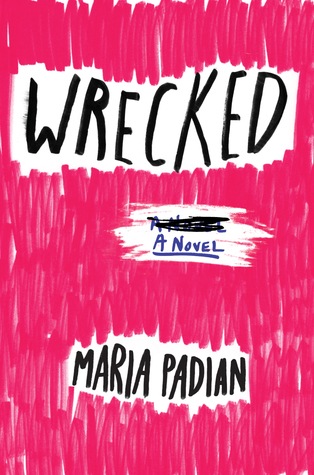
WRECKED by Maria Padian


Hello again! I'm back to blogging while my new agent is reading my revised manuscript, which will return soon for a second round of revision. For now, I'm enjoying time free to read for fun. For the book review club I've chosen a soon-to-be-released novel set at a New England college. Wrecked by Maria Padian eerily echoes the Brock Turner sexual assault case; it should be required reading for college freshman. This timely young adult novel would crossover well to adult readers too.

Wrecked investigates an alleged date rape from three perspectives: the roommate of the victim, the housemate of the accused, and an omniscient narration on the night of the attack. The reader must piece together the clues and draw his/her own conclusion about what really happened. The conflicting versions of the truth becomes the central theme of this engaging book.

Although Wrecked doesn't sugarcoat rape, this book is easier to read than others because the victim isn't the narrator. Since we hear her story second hand, there is an emotional buffer. This genius narrative structure recreates the way most of us will experience rape: one step removed. How would you respond if the victim or the suspect asked for your support? What if you didn't really know or even like them? Our two narrators are reluctant to get involved but want to do the right thing. The sweet romance that develops between the roommate and the housemate models a consensual relationship in sharp contrast to the date rape case under review by the campus administration.

Wrecked makes the reader think and ask questions. There is no obvious message, beyond a campus program on consent, which is played for laughs. The sexaul assault investigation is shown in all its murky confusion with lying witnesses, inebriated confusion, and unreliable evidence. Conviction may not always be feasible so how do you achieve justice?


Wrecked is educational, but it's entertaining too. The college campus setting is fun and true to life. There are housemates from hell, an apple picking scene, raging parties, social media mayhem, and an overwhelming number of extracurriculars on top of classwork. All the characters are well developed and humanly flawed. Both earthy feminists and boozy lax bros are satirized for balance. The mystery of what really happened makes the book a page-turner. Good writing takes a back seat to the story, never overpowering the narrative.

The author has clearly done extensive legal research and also captures the spirit of life on a New England campus with literary finesse. This book would be an excellent tool for getting students to talk about consent, boundaries, and sexual assault. Wrecked is one of the best YA novels I've read about rape. I would love to see more YA novels set at college. I strongly recommend Wrecked to teens and to adults.


My reviews of other YA novels by Maria Padian:
Out of Nowhere
Jersey Tomatoes Are the Best
Brett McCarthy: Work in Progress

Reviewer's Disclosure: author Maria Padian is a friend and we discussed this book on dog walks while she was writing it. Upon my request, Algonquin Young Readers (her publisher) sent me a galley to review. The book will be published on October 4, 2016 in hardcover and ebook. Photos are of Maine in October, where the author and I both live. Our dog walking trail crosses that bridge. Wrecked is set at a fictional college somewhere in New England.

Click icon for more
book review blogs
@Barrie Summy

Wednesday, March 16, 2016

YA Today: Three Authors in Conversation

Terry Farish, Megan Frazer Blakemore, Maria Padian & Joshua Bodwell, Ex. Director of Maine Writers & Publishers Alliance

Last Saturday the Maine Writers & Publishers Alliance invited young adult (YA) authors Terry Farish, Megan Frazer Blakemore and Maria Padian to discuss what defines YA fiction today. Even though I have been blogging about YA for nine years and write it too, I learned a lot from this informal but well informed conversation, which included audience participation. We all agreed that YA is a marketing category that should concern the publisher more than the author. Some books about teenagers are published as YA and others as fiction for adults, depending on the publisher imprint.

Maria Padian defined YA as "an emotional rollercoaster with high highs and low lows" in which the character struggles "to find a place in a world that is falling apart." She advised "writers to write the story they want to write and to leave it to the publisher to decide which box to put it in."

Megan Frazer Blakemore described how YA has evolved since S.E. Hinton in the 1960s and Judy Blume in the 1970's, whose work was surprisingly edgy even by today's standards. Megan posited that if The Catcher in the Rye were published today, it would probably be packaged as YA because the teenage voice is immediate with no distance from the protagonist. However, To Kill A Mockingbird would still be adult literary fiction because the narrator is an adult, looking back with a mature perspective.

Megan, who writes both young adult and middle grade (MG) fiction, explained how those markets differ. MG (ages 8-12) is purchased primarily by schools and by libraries, but YA (ages 12 and up) is bought mostly by individual adults (who may be buying for themselves or teens) and by fewer teenagers. Quoting figures from Publisher's Weekly, Megan reported that in 2015 adults purchased 80% of YA fiction, which is a big jump from 55% in 2012. This trend is worrisome if publishers start adjusting the content of YA books to fit an adult readership. Already there has been a shift in YA towards more books set in the junior and senior years of high school, leaving a big hole (8th-10th grades) between YA and MG. Maria added that over 75% of YA buyers are female, which might explain the prevalence of pink covers.

Terry Farish, who writes in verse about the immigrant experience and the traumas of war, described how educators' curriculum have broadened the audience for YA. Recently published YA books are finding a new home on the reading lists of middle schools, high schools and colleges. Sometimes teachers use an accessible YA novel to launch a fact-based curriculum about war, refugees and immigration. Classroom use is more gender balanced too.

My blog post Good Books About Refugees included Terry's debut YA novel, The Good Braider, and Maria's third YA novel, Out of Nowhere. Both authors conducted extensive research to describe the African immigrant experience and culture clash in Maine. Maria warned writers to avoid preaching and to focus instead on character driven drama to allow for emotional connection. As her current editor told her "I'm allergic to bibliotherapy." Megan added that the YA author needs "to write about the real world, not an idealized version."

The topic of realism segued to a discussion of profanity in YA. A handful of swear words in Out of Nowhere resulted in Maria's book being kept out of some libraries. In her upcoming novel, Wrecked, Maria has avoided any swear words, even though the subject matter of date rape is otherwise mature. Megan, who is an elementary school librarian as well as an author, explained that individual librarians make book selections at many schools, but in other districts, the collection department makes those calls. Bans on books (due to swear words or other controversial content) can affect the library collection of an entire state, such as in Texas. The authors managed to discuss this topic without swearing, showing impressive restraint.

All three authors agreed on the importance of beta readers, but they varied in practice. Maria relies extensively on her daughter, but she added male beta readers for Out of Nowhere because the protagonist was a teenaged boy. Maria also absorbed teen voices while driving carpools. Her novels have aged along with her kids from her debut about a mischievous eighth grader, Brett McCarthy, to her upcoming book, Wrecked, which is set at college. Maria's agent, Edite Kroll (who attended the panel), gives editorial feedback before the manuscript goes to her editor. Megan uses a combination of adults and tween/teen readers and absorbs the younger voice from her job as a librarian. For her MG novel The Firefly Code, Megan shared chapters with a classroom in New York City for live feedback while she was revising with her editor. Terry, who writes both YA and picturebooks, uses only adult beta readers. Since she is writing outside her cultural background, she relies heavily on adult readers from those cultures (South Sudan and Cambodian immigrants) for fact checking.

At the close, I asked a question about diversity in the YA market. A large majority of YA books have white protagonists and/or white authors. Terry and Maria offered advice on how authors can write outside their cultural background. Research and feedback from people within that culture is key. I chimed in with a plug for We Need Diverse Books, a new non-profit organization which seeks to promote children's and YA books with diverse protagonists and/or by diverse authors. If we all amplify these voices, their books will make it to a wider audience and will hopefully succeed.

If your school, library, bookstore or writing conference is seeking a realistic YA panel, I'd strongly recommend this engaging and articulate trio. Their books are fabulous too. I've read and reviewed Terry's The Good Braider, all three of Maria's books (Brett McCarthy, Jersey Tomatoes Are the Best and Out of Nowhere), and I'm currently enjoying Megan's Very In Pieces, a YA novel about a studious, mathematical girl who feels out of place in an eccentric artsy family. Very struggles to be brave as her beloved poet-grandmother slowly dies of cancer and insists on talking about death. This literary story includes romance too. My unofficial report of this YA panel was merely a summary; there was a lot more depth and breadth.

Disclosure: I'm friends with Maria, but this was the first time I'd met Megan and Terry in person. I'm a member of the Maine Writers and Publishers Alliance so this event was free to me ($5 for nonmembers). I was not compensated (beyond Maria's cookies) for blogging about this panel but volunteered to do so. I am also a member of We Need Diverse Books. My contemporary YA novel set in coastal Maine is seeking agent representation.
June 2016 update: my new literary agent is Sara Crowe at Harvey Klinger, who also represents Megan Frazer Blakemore.

Thank you to the Maine Writers and Publishers Alliance for sponsoring this panel, to MWPA Executive Director Joshua Bodwell for organizing it, to Maria Padian for baking delicious cookies and to the Glickman Library at USM for providing the space.

Afterwards, I enjoyed a brisk walk on the Eastern Prom in Portland, feeling inspired!

Wednesday, November 18, 2015

Good Books About Refugees: Tropical Zion, The Good Braider and Out of Nowhere


Last week's terrorist attacks in Beirut and Paris should raise - not diminish - compassion for refugees. Now is not the time to close our borders against the Syrian refugees who are fleeing these very same terrorists. Most of the global victims of terrorism are Muslims. None of the 750,000 refugees who have resettled in the USA since 9/11 have been arrested on domestic terrorism charges (source: The Economist). The terrorists win twice if they can rob us of compassion along with lives. How can we reverse this rising wave of xenophobia?


Books can help increase empathy. I've chosen one historical book and two young adult novels that could be used in the classroom to help young people understand the plight of refugees. If you have other books to recommend, please leave a comment. I'd especially like one about Syrian refugees.

Some countries have learned from history. Germany is welcoming a million refugees, but the USA is only accepting 10,000. Our low quota reminds me of World War II when many Jews fleeing the Nazis were not allowed into the USA. My great grandfather Arthur Lamport and other American Jews raised funds to help Jewish refugees resettle in the Dominican Republic. That true story is told in Tropical Zion by Allen Wells (2009), a history professor at Bowdoin College.

Nonfiction has the facts, but reading literary fiction has been proven to increase empathy. In a good story, we experience what the characters are feeling. The Good Braider by Terry Farish (2012) is a romance between a South Sudanese refugee and an American boy. I don't usually like novels in verse, but this one spoke to me, especially the parts set in Africa. Farish's novel traces a girl's escape from civil war in Sudan to limbo in Egypt and finally to resettlement in Portland, Maine. My only concern was that the abusive mother might give young readers a warped impression of Sudanese immigrants; most have integrated well in Maine and are dedicated to their families. Understandably, wartime trauma can lead to psychological problems so the mother was a believable character.

Farish's novel touched me on a personal level. My children went to school in Portland with many immigrant children. My son's high school girlfriend was born in a Sudanese refugee camp in Kenya and resettled with her family in Portland. She graduated from Waynflete School with honors and is now attending Wesleyan University through Questbridge. We invited her family to share Thanksgiving in our home; it was their first after many years in the USA. Before you form an opinion on refugees, get to know one. Remember that the USA is a nation founded on immigration.

Another refugee story that is set close my home is Out of Nowhere by Maria Padian. This excellent young adult novel was inspired by true events in Lewiston, Maine. The book was released in 2013 in hardcover and is now available in paperback. Soccer fans will love it. You can read my review here.

There are true stories about refugees with happy endings. The Lewiston Blue Devils have just won the Maine State Championship for soccer. Many of the players are immigrants. The coach shares their inspiring story about multicultural teamwork in a moving video below:


One Team: The Story of the Lewiston High School Blue Devils from LHSOneTeamFilm on Vimeo.

Reviewer's Disclosure: Allen Wells is a colleague of my husband at Bowdoin College and his wife taught our daughter history. My dad sent Tropical Zion to me without realizing that we knew the author. I'm friends with author Maria Padian and borrowed a galley for review purposes. I bought both young adult novels from indie bookstores and was not compensated for my reviews.

Wednesday, November 11, 2015

Author Lois Lowry at Bowdoin College

Author Lois Lowry listening to a question from a Bowdoin student.

My son introduced me to Lois Lowry. He'd read The Giver for sixth grade English and thought I would like it. I loved it. Lowry's dystopian novel reminded me of George Orwell's 1984 and Animal Farm, but The Giver felt darker because it's a children's book. The evil overlords weren't faceless bureaucrats or talking pigs but trusted parents and teachers. A boy who learns the truth must fix a world ruined by his beloved elders. This 1994 Newbury Medal winner defines the Millennial generation. It's a perfectly crafted novel with ageless appeal. The Giver was also one of the books that motivated me to write young adult fiction.

Speaking at Bowdoin College two days ago, Lowry shared her inspiration for The Giver. Her father was suffering from dementia and failed to recognize a photo of his deceased daughter. Lowry had to remind him about what happened to Helen over and over again. She became his memory keeper and a book was born. In The Giver a dystopian society has chosen to forget the evils of the world. Only the Giver remembers everything, and in his old age, he must pass all those memories onto his young disciple. The truth nearly breaks Jonas, a 12-year-old boy who must act as a man.

Although best known for The Giver, Lowry has written over forty children's books. Her first novel, A Summer to Die (1977) was inspired by the death of her sister. Her favorite is Autumn Street (1980), an homage to her grandparents' cook whose child was murdered. Number the Stars, set in Denmark during World War II, won her first Newbury Medal in 1990. She has also written lighter, humorous books for young readers. According to Lowry, the theme that unites all her work is reconciliation.


The author at age three getting a reading lesson from her six-year-old sister Helen. 

Lowry's personal story was interesting too. Born on Hawaii Island in 1937, Lowry moved to New York City right before the bombing of Pearl Harbor. Her father was General MacArthur's dentist so the family relocated to Japan during the Occupation. In Washington D.C., her dad cared for the Nixon family teeth. Back in New York City, Lowry won a national poetry competition, which earned her a writing scholarship to Brown. When the poetry book was published, Lowry was horrified to learn that her high school teacher had rewritten her poem. Like many women in the 1950s, Lowry dropped out of college to get married. She later completed her education while raising four kids in Maine. Her first book was published when she was forty. Lowry now has a graduate degree, several honorary degrees (including one from Brown), two Newbury Medals, and four grandchildren. At age seventy-eight she is still writing new books.

Questions for Lois Lowry from the audience at Bowdoin College.

Lowry writes children's books because "kids are changed by what they read." She shared some reader emails and answered the questions of the enthralled Bowdoin students in the audience. Her responses were heartfelt and often hilarious. I'd gone to Lowry's talk with young adult author Maria Padian, and what surprised us the most was how funny Lois Lowry was in person. Lowry shared family photos, news clippings and book covers. A photographer myself, I was impressed to learn that the iconic cover photo of The Giver was one of hers. I remember the challenges of SLR cameras and darkroom photography before Photoshop. She is clearly a woman of multiple talents. I left Lowry's talk feeling inspired.

Simpson's Point in Brunswick, Maine at sunset.

Tuesday, January 27, 2015

Storm reading: The Remedy for Love by Bill Roorbach


perfect cover!
With a blizzard pounding the northeast, now is the time for a good book by the fire. The Remedy for Love by Bill Roorbach captures the beauty and the menace of a Maine winter. The title comes from a Henry David Thoreau quotation: "There is no remedy for love but to love more." This romantic thriller has literary panache.

Roorbach's novel opens as the storm of the century approaches Maine. Eric is shopping for a gourmet meal to win back his estranged wife. The line is held up by a smelly misfit who doesn't have enough money to cover her basic needs. Eric puts down a twenty and offers Danielle a ride home.

By the time Eric has hauled water from the icy river and split logs for Danielle, his car has been towed away with his cell phone inside. The snow is coming down hard. He's now stuck in a summer cabin off the grid with a deranged woman who doesn't want him or his pity.


I enjoyed the characters despite their sizable flaws: macho Eric was smugly judgemental but generous and crass Danielle was mentally unstable but surprisingly smart.
"You grin at me, even when I'm, like, clearly f***ing desolate. And when I'm...? You grin. You're trying to look harmless but you're hiding this fat aggression. It's a little sick. You're grinning now, mister. It's like looking at double exposure - you want to show how friendly and nonthreatening you are, but at the same time you look like you're about to bite me."
The blizzard was a character in itself, sliding the cabin off its foundations as Eric and Danielle lose their grip on all that had anchored them to their disappointing lives. The only character who wasn't convincing was Eric's estranged wife. She seemed too ordinary compared to Danielle's soldier husband, who added another layer or menace, lurking in the backstory. The ending had a good plot twist.


Remedy for Love is a psychological thriller, a literary romance and a social commentary on America. In backstory, the narrative covers the travails of small town law and the horrors of the war in Iraq. In front story, life is condensed into the claustrophobic confines of a log cabin. Although the writing was often beautifully evocative, some descriptions were too raunchy for my taste. I liked the novel best as a survival story and as a portrait of Maine. Roorbach clearly knows his stuff. After reading this book, I feel better prepared for the storm. If I'm not online, I may be tending our woodstove or plotting our escape.

Reviewer's Disclosure: I've posted early (while I have power) to synch with the blizzard, but this review will be part of Barrie Summy's blogger book review club (link below) on February 4th. I took the photos on Sunday while skiing at the old Brunswick Naval Air Station with my daughter. This 2014 book was a Christmas gift from my husband, purchased at Longfellow Books in Portland. I'm sorry to report that Stuart Gerson, one of the bookstore's founders/owners, died last week.

"The sun out there was warm, but the breeze, damn, the breeze was sharp like broken glass."
-Bill Roorbach

Click icon for more
book review blogs
@Barrie Summy

Wednesday, December 31, 2014

A Winter Song


I hope you're enjoying the grand finale of 2014. It has been a year of strange weather: a cool summer, a summery October and a white Thanksgiving. I self-timed our family photo in our backyard after power returned to roast the turkey. Sadly the snow melted before Christmas, one of our warmest and wettest ever.

We had to drive a couple hours north to find snow at Sugarloaf Mountain. I teach the kids downhill and they coach me in cross-country skiing, our roles reversing. I learn so much from them. It was one degree Fahrenheit yesterday morning so we chose cross-country: treading uphill on skis is warmer than sitting on a chairlift!

On the drive home, we listened to a mix-CD of snow music that my daughter made for me. My favorite song was "Winter Song" by The Head and the Heart. In December we were lucky to see this fabulous indie folk band live in Portland, Maine. I love how my kids introduce me to new music. This one is gorgeous:


Book Watch: My Best Books of 2014 List

What I'm reading now: The Remedy for Love by Bill Roorbach
A Christmas present from my husband. Sixty pages in, I'm enjoying this 2014 novel by a Maine author. Roorbach captures small town Maine in winter with all its beauty and hints of menace.


Goodreads: They're calling it the "Storm of the Century," so Eric stops at the market for provisions on his way home from work. But when the unkempt and seemingly unstable young woman in front of him in line comes up short on cash, a kind of old-school charity takes hold of his heart-twenty bucks and a ride home is the least he can do, right? Trouble is, Danielle doesn't really have a home. She's squatting in a cabin deep in the woods, no electricity, no heat, nothing but the nearby river to sustain her. She'll need food, water, firewood, and that's just to get her through the storm: there's a whole Maine winter ahead. 

So he gets her set up, departs with relief, climbs to the road, but his car has been towed with his phone inside, and the snow is coming down with historic speed and violence. There's no choice but to return to the cabin. Danielle is terrified, then merely hostile-who is this guy with his big idea that it's she who needs rescuing? As the snow keeps mounting, they're forced to ride out the storm together. For better and for worse. 


Happy New Year!

Wednesday, October 1, 2014

Euphoria by Lily King: review & interview

Euphoria by Lily King is the best book I've read this year, and I read a lot of books. This historical novel has brilliant insights on human nature, and the writing is as gorgeously lush as the tropical setting. The story was inspired by the life and work of Margaret Mead, an American anthropologist. Mead was controversial for her personal involvement with her research subjects and for her revolutionary theories on sexuality and adolescence. She was also one of the forerunners of feminism. Euphoria's Nell Stone embodies her spirit.

The narrative takes place in 1930's New Guinea on a tropical backwater isolated from the civilized world. The central characters are three anthropologists: American Nell, her Australian husband, Fen, and their British neighbor, Bankson. Although sexuality is part of their uneasy dynamic, the connection between these fascinating characters is more intellectual than erotic.

Nell's greatest passion is her work. Fen is jealous of his wife's fame, but Bankson finds her work ethic and ease with the natives inspiring. Nell nurtures the men in her life but resents her dependence on them for access to her male subjects. The three researchers have unique talents, and when they come together in an orgy of ideas, they create a new theory that rocks the world and has unintended consequences.

Nell describes the favorite part of her work, which gives the novel its title:
"It's that moment about two months in, when you think you've finally got a handle on the place. Suddenly it feels within your grasp. It's a delusion - you've only been there eight weeks - and it's followed by the complete despair of ever understanding anything. But at that moment the place feels entirely yours. It's the briefest, purest euphoria."
True to Margaret Mead, Euphoria portrays New Guinean tribal societies with respect:
"'They are human, with fully functioning human minds. If I didn't believe they shared my humanity entirely, I wouldn't be here.' She had real color in her cheeks now. 'I'm not interested in zoology.'"
Euphoria has a marvelous sense of place. It's a book that's meant to be read slowly, with every sentence savored. It's worth buying the beautiful hardcover edition, featuring a Rainbow Gum Tree. The rough-cut pages seem to stick together with the humidity described in lush, tactile words. When the dry season comes, the plot pivots too in this tropical world of extremes:
"Because the rains were late, the road was a desiccated crust, hard as marble underfoot. Ripe fruit exploded when it hit the ground. Hot air blew down from the high trees, their dry fonds cracking against each other. Bugs aimed for her eyes and mouth, looking for moisture."
Every page is brimming with luscious prose, and yet the pace never lags. The writing doesn't distract you from the story. Historical and anthropological details are informative but not didactic. The characters are vibrant. It's not easy balancing all these elements, and few authors manage to achieve such narrative harmony. Lily King's Euphoria could be shelved beside and Barbara Kingsolver's The Poisonwood Bible, Ann Patchett's State of Wonder and Isabel Allende's Eva Luna: beautiful stories about strong, intelligent women in wild, primitive places. Euphoria won the New England Book Award for 2014.

Flamingos at Lake Naivasha, Kenya

I'd enjoyed Lily's previous novels, but the subject of Euphoria holds more personal resonance for me. For years I've been fascinated by Margaret Mead and other women scientists who broke into fields dominated by men. At college, I studied Anthropology and considered a career in field biology. I spent summers doing field research in Kenya and on the Gulf of Mexico. Euphoria felt all the more real because I'd lived and worked in similar conditions, albeit with fewer luxuries. Then again, I had malaria medication. After reaching the last page, I had many questions.


Luckily I didn't have far to travel for answers. The author lives near me, and we'd met briefly once before through the Maine Writers and Publishers Alliance. Lily suggested meeting at "Brakes and Shocks," a new coffee shop in the West End of Portland. The building used to be a garage and then a laundromat. The cafe's official name is Tandem Coffee + Bakery, but I'm still calling it Brakes & Shocks. It had a cool retro-modern vibe, gourmet coffee and fresh baked goods. The goat cheese, caramelized onion and apple scone sounded like an odd combo, but it was delicious. With its walls of glass, Brakes & Shocks was a wonderful place to chat on a sunny autumnal day.

My Interview of Lily King

Author Lily King at Tandem Coffee + Bakery, photo by Sarah Laurence

Sarah: Your previous novels were contemporary fiction and well received. Why did you switch to historical fiction for your fourth book?

Lily: I didn’t mean to. Nine years ago, when I was just starting my third novel, Father of the Rain, I found Jane Howard’s 1984 biography of Margaret Mead in a used bookstore and I got to this chapter all about this fieldtrip to Papua New Guinea she made with her husband in 1933 where she met and fell in love with another anthropologist, Gregory Bateson, with whom she connected both emotionally and intellectually, and they had this really intense love triangle for five months. I couldn’t help thinking that scenario would make an interesting novel. So that got me reading Mead’s memoir, her academic work, and her letters. But for a long time I didn’t think I could actually write that novel.

Why not?

It was just so far out of my comfort zone on every level. These people would not live in houses but in the jungle of a country I’d never been to. It would take place in 1933 and the three main characters would be scientists. Plus it was historical and I don’t usually read historical fiction. I don’t like feeling that I’m being fed a lot of research.

Your writing was very tight and focused. How did you hold onto your story?

Thanks. I really tried, even as I was doing the initial reading for the novel, to keep my mind open to ideas and possibilities. And I limited the amount of researched detail I used. I used a fraction of what I wrote down in my research notebooks. It had to be essential to the action. Otherwise I chucked it. The narrative had to drive the story, not the research.

Anthropologist Margaret Mead, photo from Wikipedia
Why did you change Margaret Mead’s name to Nell Stone?

Nell is not Margaret Mead. I got the idea by reading a biography of her and I definitely borrow many details from her life and the lives of her husband Reo Fortune and Gregory Bateson, but in the end I tell a very different story. I thought at first I would use their names but by the end of the first chapter, as the characters took shape, I felt handcuffed by history and I had to break away from it. Once I changed their names, my characters were free to be different people. They became my characters. I didn’t land on their names immediately. Nell was originally Polly, but she wasn’t a Polly. Andrew Bankson started out as Geoff. Characters grow into their names.

Since Nell is the protagonist of Euphoria, why didn’t you narrate the book from her voice?

Initially, I tried to write it exclusively from her point of view, then from all three of their perspectives. But Bankson’s voice was the one that really felt right. Once I got his voice I realized it was his story. And that really changed all my ideas for what would happen in the end. But I did need her perspective, so I included her journal entries, which were initially letters from her to Helen, her lover of many years.

I was surprised to learn from other interviews that you wrote Euphoria in your attic without ever visiting New Guinea. Your book has a marvelous sense of place and vocation. Have you done fieldwork in developing countries?

No, I was an English major and never took an anthropology class. The only experience I have had in the jungle was when I went up the Amazon in Peru with my new boyfriend (now my husband). I definitely remembered the heat, the oppression of the heat, and the things we did, but when I found a little notebook I’d brought on that trip, I thought I would find all sorts of good details, but all it had in it was the beginning of a letter to my sister all about how he and I weren’t getting along in the oppressive heat. So I had to be an armchair traveler for this novel. I read everything I could find about the region and anthropology, ethnography and fieldwork.

How long did it take you to research and to write Euphoria?

I researched the book intermittently while I was writing Father of the Rain. When that was finished, I spent a few more months reading about Mead and New Guinea, then started in. I wrote the first draft of Euphoria in a year and a half, then spent about six months revising on my own. After I’d written six or so drafts, I shared it with my husband, my writers’ group, my agent and my editor. Then there were more revisions.

 Do you have an editorial agent?

My agent, Julie Barer, is an editorial agent. She had me do a good bit of revising before sending it to my editor, Elisabeth Schmitz, whom I’ve had the great fortune of working with at Grove Atlantic for all my books.

Will your next book be historical or contemporary fiction?

My next novel will be contemporary, I think, set in somewhere between 2003 and now. I have six pages of notes and a page and a half of the first chapter. I have a lot of research ahead of me. It’s going to be a really challenging book to write.

Tandem Coffee + Bakery (Brakes & Shocks)
742 Congress St. Portland, Maine
What is the best writing advice you received?

I think it’s a quote by E.L. Doctorow:

“Writing is like driving at night: you never see further than your headlights, but you can make the whole trip that way.”

That's one of my favorite quotations too, and it fits our location. Sometimes I wish for fog lights when I'm revising. 


Thanks, Lily, for joining us at the book review club, and good luck with the next book!

Click icon for more
book review blogs
@Barrie Summy

Reviewer's Disclosure: I was not compensated for this review, but I have a personal connection to the author. Lily's daughters attend the same school as my daughter. She agreed to the interview on my request and didn't ask me to review her book. I bought my copy of Euphoria at Longfellow Books and two more at Gulf of Maine Books to give as gifts. My mother enjoyed Euphoria too.