Wednesday, October 3, 2007

A Wall of Inequity


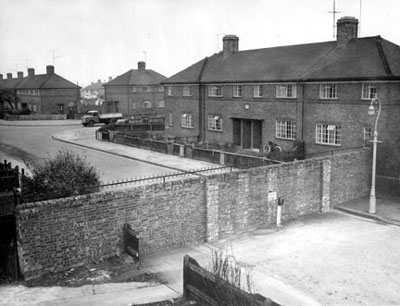
There once was a wall near my daughter’s school in Oxford. It cut off the council housing (low-income housing project) from its more affluent neighbors. Erected in 1934 by a private developer, two walls transected even the road. Following public protest, the walls were demolished in 1959, twenty-five years later. The inequities persist today.

My daughter was placed in the one school that still had openings. As we bike or walk the mile and a half to her school, we pass kids her age from this district going in the opposite direction like rats fleeing a sinking ship. There are no school buses. No city buses travel our route. We have submitted a petition requesting a transfer to our small village school, a short walk away. We have been waiting weeks for a hearing.

An Oxford academic explained that to revitalize the state schools with dwindling enrollments, all schools were open to anyone given space. Preference is given to geographic catchments. Joining late is a disadvantage.

There was no space at all in the large secondary school for her brother. The other option was a long drive away, and we heard of bullying problems there. My children are British citizens so they were not treated differently for being one-year visitors. We were able to send our son to public (ie private) school, but other families don’t have that option.

I find the lack of equity shocking in a system of national education. My daughter’s primary school includes most of the council housing population. There is widespread swearing among the students, and teachers routinely shout for order. Many children are in foster care and have difficult home situations. A large number of students are special needs.

The average mother/caretaker at school pick up time is smoking and/or wearing high heels and tight clothing with unevenly dyed hair. I consider myself a young mother, but most of the parents look ten years younger than me and have larger families. Quite a few fathers in work-clothes pick up too, even more than in Brunswick, Maine. The parents at our local school appear to be of a totally different class, age and educational level.

I’ve always considered the economically diverse student body in Maine public schools a benefit. Accepting this high degree of segregation in Oxford is not right. It makes the inequities that parents are rightly protesting in Brunswick pale by comparison. Why don’t parents complain here?

Despite the inequities, there are advantages to my daughter’s school that address our situation. Many foreign students live in the catchment area, and it is the school of choice for the few Japanese families. It has students from over 20 nations and is ethnically diverse. The school had a welcoming reception for foreign parents and does much to promote cultural sharing. They even studied the Jewish high holidays, although my daughter was the only Jew in the class.

Due to a national curriculum, all children in state school learn the same material. The school’s test results are similar to our neighborhood’s ones and average for the county. This is quite impressive given the high number of ESL students.

It helps that my daughter is not the only foreign student; there is even another American in her class. There’s a child from Georgia (the country, not the state) as well as several other countries. The girls have been very welcoming to her, and she already has had play dates with two friends whose parents are schoolteachers. All the primary schools are small with only one class per year although the class is large with 30 kids.

Math has been a challenge for my daughter mainly because the notation, term names and the system of learning are different. She was marked down for using commas and not setting her long division work into grids. I had to teach her long multiplication, long division and fraction simplification.

Math is taught sequentially in the US starting with addition then subtraction and not progressing until the basics are mastered. Understanding the concept and showing your work is as important as getting the right answer. This used to plague my son in elementary school who does math in his head and has sloppy writing. The Brits are even more upset by poor penmanship. Even math work is done in special handwriting pens.

My daughter has always done well in math and found it discouraging to have a teacher chastising her for not knowing facts that she “should have learned years ago.” The English system introduces all concepts at an early age through memorization so kindergarteners start work on multiplication but won’t understand that it is built from addition. They learn everything at once at an early age.

It appears that Americans do catch up. My son’s “maths” class is repeating material he learned last year in the advanced math class, but the pace here is twice as fast so he will be learning new stuff by mid-year.

Despite all the challenges of adjustment, my children have settled into school and are enjoying the curriculum and their new friends, if missing old friends from home. My daughter is thrilled to have a teacher who encourages creative writing, and the two girls we had over were delightful. All the children at her school have been polite and helpful when they see me. We know little of our son’s new world.

The biggest drawback of not having children in our local schools is not becoming part of the community. It makes me appreciate the wonderful experience of having my children attend a small elementary school near our house in Maine. I too made many friends and became involved in educational advocacy through that stimulation.

Small neighborhood schools can build community and encourage parental participation, but the ideal is often lost in the reality through poor management. Public/state schools should be all about equity and good education. Americans are not alone in struggling with these issues.

Photograph from Oxfordshire County Council Archive.

Wednesday, September 26, 2007

Quince Tree


The owl and the pussycat “dined on mince and slices of quince, which they ate with a runcible spoon.” It was my favorite nursery rhyme. Before discovering a quince tree in our backyard, I couldn’t picture the fruit any more than I could define runcible. It turns out Edward Lear made up the word “runcible,” but the fruit defies imagination it is so weird.

My English mother-in-law described the quince as a cross between an apple and a pear. It certainly looks like a fuzzy pear, but it tastes like unsweetened cranberries or rhubarb. But don’t the Brit’s love rhubarb too? Mind you, add enough sugar and cream, and you can eat anything, even quince.

Henry assayed a quince stuffing in roast chicken, hence the unsweetened cranberries simile, and had more success making quince jelly. He then used a spot of quince jelly to prepare a savory gravy for quails. Now that was tasty, only my daughter found the tiny birds too life-like to eat. Qunice, she proclaimed, is either bitter or sour. My dog likes rolling in them. I’m trying to train Stella to collect the fallen fruit before the wasps find them.


My daughter’s watercolor of the quince tree and laundry.

A search on wikipedia showed that the Portuguese word for quince is marmelo and that the word marmalade originally meant quince jam. Apparently quinces need a more southern climate than England to ripen.

My claim is there is only one season in England: wet and 40 to upper 60’s. It doesn’t rain all day, but it sprinkles like a greenhouse mister. If it does get cold enough for snow, the whole country grinds to a halt. The sun shines in the 80’s, and it’s a heat wave /drought. Having lived about two years in England over the past couple of decades, I have never seen before the three pleasantly warm and sunny weeks we have just enjoyed. Needless to say, as soon as I blogged about that last week, it started raining.

After Monday morning’s monsoon, we bought a dryer. It was more green to have a clothesline, as in the moldy green color of our underwear. My son had to wear dirty sports kit to cross-country practice. Even on a dry day, our clothes were taking two days to stiffen into cardboard. “I hate crusty socks,” my daughter sighed. Hard water doesn’t help.

One trick to doing laundry in England is the airing cupboard. These are wooden slats built above the water heater to dry line-damp clothing. Unfortunately our house has the nation’s smallest airing cupboard. My dog keeps wagging over our supplemental drying rack and picking socks like berries.

On the weekend we went on a blackberry-picking hike. Three and a half pounds later we are now planning on a quince and blackberry crumble. The berries at least are unbelievably sweet, unlike their American counterparts.

We passed sheep and cows, then circled back along the Thames.

Stella appreciated the dog doors at the fences.

We also drove twenty minutes to Woodstock to visit Blenheim Palace where Winston Churchill was born. Churchill gave up his noble title so that he could become prime minister. During World War II, Hitler did not bomb Blenheim because he planned to rule his empire from that seat.


The palace facade was very grand, but the small rooms inside were dark and dreary despite all the gold leaf. The library was a treat with big windows and more leather bound volumes than I’ve ever seen in one place. The vast estate covers 2,700 acres, and the Capability Brown gardens were pleasant. We only got sprinkled on once.


After Maine, I find it a bit freaky how the countryside is completely cultivated. There are no wild woods only hedgerows. On the plus side, there is little suburban sprawl and farming is doing well. I especially appreciate the rights of way allowing the public to traverse private estates and farms. Dogs are welcome almost everywhere, even on the bus and in pubs. They are tolerated more than children.

A typical mistake Americans make is assuming that England will be similar due to the common language. Culturally there is a sizable gap that is a reflection of the landscape. English society is well cultivated and seeped in tradition and culture, but it lacks the wild exuberance of the USA. I don’t think one is necessarily better than the other, but it’s quite different. Leaving one’s home is the best way to get perspective and appreciate what you have and acknowledge what you are missing.

I never feel more American than when I’m living abroad, but until I open my mouth, no one knows. People are always asking me for directions, no matter where I am. I think that’s the New Yorker in me: always walking someplace briskly and acting like I know where I’m going.

I find my way as I go along. The trick is being observant and exploring detours. It’s quite like writing a novel. The journey is all part of the adventure.

Wednesday, September 19, 2007

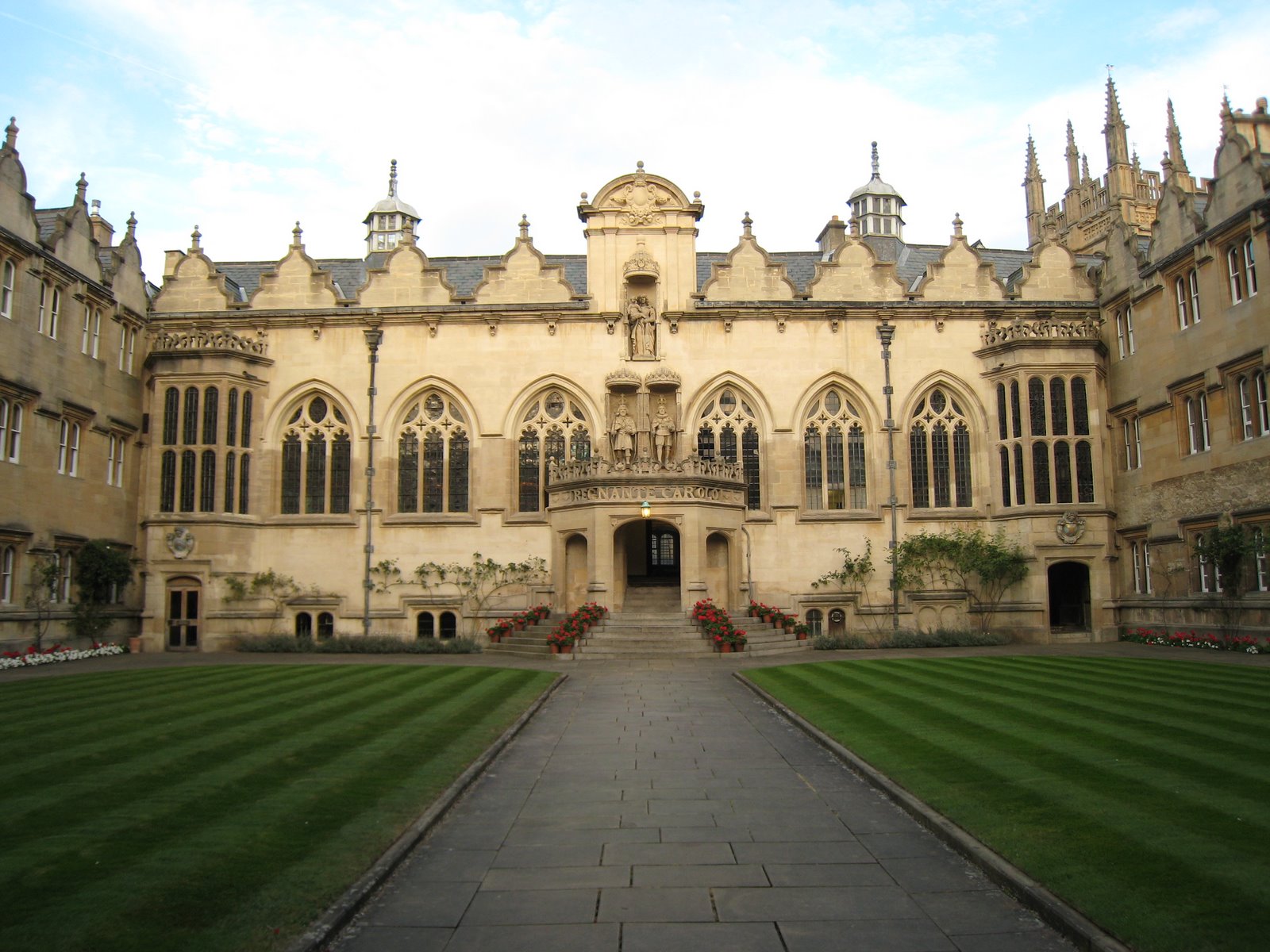
Black Tie at Oriel College, Oxford University


I realized my mistake only when I tried to sit. A long gown seemed appropriate for a black tie dinner at my husband’s alma mater. There was the added benefit of hiding my old shoes. When Henry was at Oriel, it was all male. No student would have had to hike her dress up to her knees to straddle the bench, although he would have worn an academic gown.

The men on the wall side actually climb onto the bench and then the narrow table to reach the other side. Grown men in tuxedos were stepping through china, linen napkins and wine glasses. The elders sat on chairs at the high table. I must have been one of the youngest at the Oriel Society dinner.

Framed in gold, Oriel forbears, such as Walter Raleigh, watched the scene with imperious detachment. The dark oak-paneled room had a high vaulted ceiling and was far longer than it was wide. Cavernous! Add brooms and it would be Hogwarts.


The dining hall at Christ Church (above), the grandest college at Oxford, was actually featured in the Harry Potter movies. This wealthy and aristocratic college was also the setting for Evelyn Waugh’s Brideshead Revisited. Oriel is more intimate, but the feeling is similar. Founded in 1326 Oriel has 300 undergraduates. Christ Church dates from 1524 and has 450 undergraduates. Oxford University is really a congregation of many small colleges with separate admissions and faculty. The colleges compete in sports and have individual identities.


Henry was in his element sporting his boating club blazer for coxing the second eight. Oriel is known for being the rowing college at Oxford. In Henry’s day there were fifteen 8-man boats, steered by a cox. At the Oxford bumps races a team moves up the rank by actually bumping into the next boat. The winning team tosses the cox into the river. Then the Head of the River has a big drinking party around a bonfire of an old boat followed by a bumps supper in the hall.

It appeared Oriel was also the drinking college. With every course came a different drink: champagne before dinner, white wine with the fish, red with the lamb and a dessert wine with the chocolate pudding. This was followed by two types of port, always passed to the left. The first port came in a silver flagon!


To my right was Tenzin Wilberforce, a Tibetan from India married to another Oriel alum, and to my left was Henry’s chum, Vince Warner. He was wearing a most unusual waistcoat, as were several distinguished gentlemen. I asked one man with silver hair, “What’s with the turtles on your waistcoat and bow tie?”

“Turtles? Turtles! My dear, those are tortoises.” Only the first eights crews are allowed to join the Tortoise Club.

Makes no sense to me. Turtles like water, and tortoises are slow land animals. It isn’t about making sense. The Leander Club of rowers wear pink hippos on their ties and have the exclusive right to enter the steward’s enclosure for the Henley Regatta.

The English are all about signaling who belongs in the inner enclosure. Like peacocks, they strut their plumage, marking their territory. Imagine the shock of an American woman flying into the flock, snapping pictures for her blog.


The gentleman in the butterfly-embroidered waistcoat asked if I was from Vogue! He belonged to no secret club. His talented wife, Marion Clegg, designed and embroidered his garment. The inspiration came from the Beatrix Potter story, The Tailor of Gloucester.

I am indeed living a fairytale. It hasn’t rained in the three weeks since we arrived, and I’m finally connected to the internet.

Wednesday, September 12, 2007

Wolvercote


At the end of our road are cows, horses and a bus stop. Wolvercote is a couple of miles up the Thames (or Isis as it is called only in Oxford) from the university. Port Meadow stretches as far as the eye can see along the river. Dogs run off-lead and swim with the swans. Stella tried to catch one, but it hissed at her. Its takeoff sounded like galloping horses taking down a sail. Stella has not tried again.

So how did I get my dog to England and avoid the rabies quarantine? Ridiculous amounts of money and more than six months of paperwork. Stella had to fly British Air cargo while we had frequent flier miles for American Airlines. The British authorities insisted on a Saint Bernard size crate that fit not only the dog but also three kids. It would have been cheaper to buy Stella two seats on the plane! Or a new Golden Retriever in England?

Our friends the Bradley-Webbs, who moved to France from Maine, said taking the dog was the best thing they did to feel like home, especially for the children. They were right. Finding Stella sprawled belly up, chewing on someone’s sock, is home. She took the journey in stride and has already become pals with my in-laws’ King Charles spaniel.

Henry’s parents live in Goring up the Thames from us, less than an hour drive away. They’ve been a tremendous help dog and kid sitting while we got settled. Like magicians, they pulled out of their small basement extra china, glasses, rugs and desks for the kids. I’m not sure if it’s jetlag or the move, but I’ve never been more exhausted. It’s been worth it.


Wolvercote is such an idyllic setting with Beatrix Potter cottages around a village green. There are even hedgehogs living on our dead-end road: imagine a prickly hamster only cuter. Other than the rumble of the not so distant motorway, it’s surprisingly rural. The buses run every 15 minutes. Henry's office at the Nissan Institute of Japanese Studies at Oxford University is on the route, only 10 minutes away.

All the houses on our road are attached and hobbit sized. It’s a friendly neighborhood like Brunswick, Maine only more international. I’ve already met many on our road, including three partially American couples, one who met in Japan. Most of the children are very young, but one is my daughter’s age. They became buddies on the first day.


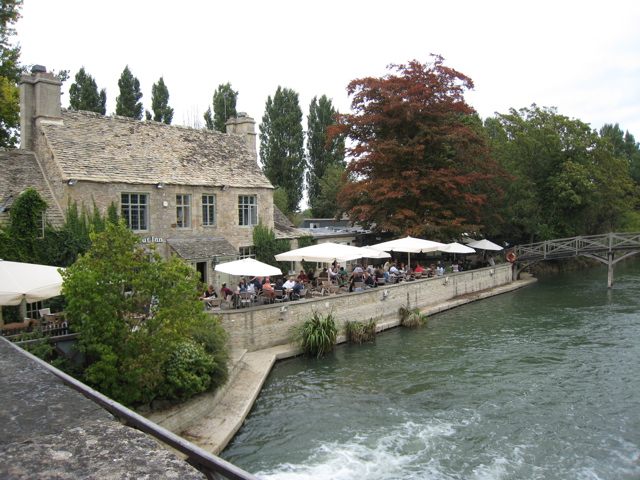
Wolvercote has a post office/convenience store, one Chinese take-away and four(!) pubs. Henry claims The Trout is the best pub in Oxford County. I highly recommend the beetroot and goat cheese salad with a half pint of Landlord to chase jetlag. This is what happens when an Englishman picks a residence: country walks and a good pint.


Henry did well as our new home has a gourmet kitchen complete with an American-size fridge and an open-plan family/dining room overlooking the garden. My elbows hit the shower stall walls when I lather up, but the pressure is good even by American standards. It also has a deep English bathtub and architect designer touches, feeling like a luxurious vacation home. The only drawback is no drier in a country with more rain than sun.


I found a Staples and transformed the fourth bedroom into a cozy office. I bought a thesaurus and a baby name book in a discount bookshop. If only getting BT to connect us to the internet were as easy. I'm blogging from Henry's office while he's at a conference.


I’ve needed some time off work to hit the superstores and fill the gaps. Can we live without a microwave? Where can we find nesting Tupperware? I never thought I’d say this, but I miss Wal-Mart, especially given the worst ever exchange rate of the dollar to the pound. Lamaze breathing helps for sticker shock.

It cost $100 to fill the tank of the used Subaru we bought sight unseen. It’s a drug dealer’s car all black with tinted windows, leather seats and a vicious alarm. Or maybe designed for a funeral? Hopefully not mine. It takes some getting used to driving on the wrong side of the road. It was like the windscreen was a mirror. Worse still, every turn has hedges blocking the view of traffic, and the roads are often not wide enough for two cars, especially over bridges. Some bridges have traffic lights, but usually you have to back up and pray you don’t hit the elderly lady with a straw hats on a bike behind you. My trial run was during the next village’s fair, but somehow we survived it without crashing into a thatched cottage.

Despite the challenges, I’m thrilled to be here. I’m already back to work revising S.A.D. and gathering material for NOT CRICKET (A MATCH FOR EVE). It’s such an adventure to try a new life for a year, especially in a storybook setting. If only BT would deliver our modem, the fairytale would have a happy ending.

Tuesday, September 4, 2007

The Holy Internet Grail

My daughter spotted the sign in Oxford Center: internet in the basement only 75p. Looking both ways, we crossed the high street. Not so much to see if anyone shady was watching us, but to make sure we weren't flattened by the bus on the wrong side of the road.

In the shabby convience store we paid the cashier before desending narrow steps. Flourescents buzzed, paint peeled, carpet stank of mildew, and the computers were as ancient as the chairs. You get what you pay for, but I'm not complaining.

At Starbucks the WiFi hotspot must have been refering to the burn in your wallet. At £5 (or $10) just for the privildege to connect with your laptop, I thought the barista was joking. Free WiFi does not appear to exist in England.

I'm only here because BT won't connect us for WiFi at home until Friday after hours and hours over days of waiting on hold for the appointment. Send me anyplace in the world but keep me connected. I start most of my research on line to find people to interview or books to order. I'm a huge fan of Wikipedia. The internet is my umbilical cord to my friends, family and agent. At least the isolation is only temporary and snail mail and phone are working just fine.

I can't blog about our lovely village or share my photographs in this den of cyber-antiquity. I will post a more cheerful blog soon, I hope. We are doing well and settling in with the kids starting school tomorrow. Transitions are difficult, but the hardships provide the best writing material. For now, I sign off. It's midmorning back home in Maine, but tea time here.